Invisible Women (2019)

Happy 2023! First post in 2013! This is my 10th year blogging here. 🙂

I wouldn’t call myself a feminist, but I guess I’m not a female who would willingly fit myself into the more “traditional” roles that women have been expected by the society and their older generations. I have always an advocate for the minorities, like for ethnic minorities or the LGBTQ etc in the school, but I seriously refuse to think that women are in the minority, though it often feels so!

This is a book I noticed recommended by the school librarian and as a member of staff in this DEIJ/B (Diverse, Equity, Inclusion, Justice/Belonging) school, I thought, “let me read this and see if there’s anything I don’t already know!”

Invisible Women: Exposing Data Bias in a World Designed for Men, by Caroline Criado Perez

So much. There were so much! So much that I don’t already know. Some were shocking, like in the medical field, how women have been taking medication that were mostly trialled with only or mostly men and how much medication has not been developed based on women’s needs. Or, how the data has long shown that women have worse outcome recovering from heart surgery, but only recently researchers found that it’s because women jump right back into their carer roles after the surgery, while men are more likely to have someone looking after them. And single women tend to recover better from bypass surgery than married women, and you can guess why! Et cetera. Et cetera.

This is nothing against men, and you don’t have to be a female or a feminist to read this book. But it opens my eyes on how the world operates with the men as default and how this is affecting us women in every possible way…

Four Thousand Weeks (2021)

I don’t think I’ve ever read any book on time management, I never see the need to do so to be honest… I can’t remember how I came across this book by Oliver Burkeman, but I’m quite sure it was so highly recommended by a bunch of people that I decided that “right! I will see what’s in there for me!”

Four Thousand Weeks: Time Management for Mortals,
by Oliver Burkeman.

This is not your usual time-management self-help books, that teaches you how to organise your time, increase your efficiency, prioritise this and not that, wake up at 5am and do this 5 things before everyone else wakes up, no, nothing like that.

I guess for me, it’s very much philosophical yet in a practical way, on how you see life, how you use your time, your focus and attention, and perhaps seriously, not worry so much about how much more you can achieve within a day or week or any given time frame, instead, focus on how you live presently, connecting with yourself and others and maybe your environment. I’d love to learn the hardest task for humans — doing nothing, like, nothing, not even noticing your breaths or letting go of thoughts kind of nothing.

A few quotes that I like from the book:

The trouble with attempting to master your time, it turns out, is the time ends up mastering you.

You come to realise, missing out on something, indeed, on almost everything, is basically guaranteed, which isn’t actually a problem anyway, because missing out, is what makes our choices meaningful in the first place.

People are like donkeys running after carrots hanging in front of their faces, from a stick attached to their own collars, they are never here, they never get there, they are never alive.

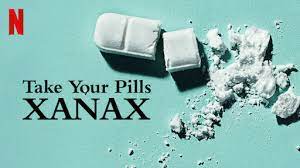
Documentary: Take your pills: Xanax (2022)

Watch Take Your Pills: Xanax | Netflix Official Site
Netflix Documentary: Take your pills: Xanax

Xanax, an anti-anxiety that I’m very familiar with from the 7 year working in a psychiatric clinic. I was excited to see this title showing up in the list of recommended shows as I was trying to find something to watch over the weekend, after waking up really late from watching the World Cup (Qatar 2022).

It consists of most things I already know, and many things that I’ve explained to many laypersons over the years, I definitely recommend this to everyone who experiences anxiety, who knows someone who’s taking anti-anxiety to watch this (essentially everyone), and think about it… Unfortunately it’s not the most “interesting” documentary with a twisting story-line, but it’s important to learn how we are often fed certain drugs (and nicely called medicine) when there are many things else we can do to cope with it, might be harder and sometimes more costly, but without any side effects, dependence, tolerance and withdrawal symptoms.

My stance is clear, I don’t mean to not take any pills for anxiety, because sometimes the anxiety can be so strong that it’s almost impossible for anyone to deal with, leave alone function, so this is when pills like Xanax can play a role, but when you’re feeling better, definitely do not just believe that you can just keep popping the pill into your mouth the next time when it happens, instead, learn about anxiety, your triggers, how you can cope with it the next time it happens, and practise those coping techniques. It takes a while, but you can ultimately depend on yourself and nothing else…

Feel free to read about my older writings on medication.

The Extended Mind (2021)

It’s been a while since I last updated my blog. Life has been up and down, and very eventful, across work, personal, family, friends etc. I often think about my blog and how I can’t let it just die off like that. I’ve had a lot of stories to tell, but I haven’t been able to stay focus to write them. Anyway, here is a book that I finished listening few days ago…

The extended mind: The power of thinking outside the brain
By Annie M. Paul, audio book read by the author

It has an interesting title I’d say, but it isn’t quite what I expected. The author Annie Paul shares about how we can “think” beyond using our “mind”.

My takeaways from how we can extend the mind:

  • Make use of your body and gestures when you learn something, it helps you to learn better.
  • Externalise what you are learning and reading, for example, draw them out, or even act them out, role play what you learn and you will remember better
  • Moving around when you have discussions, are working, or learning something. Classes should be run not just within the classrooms. I’m thinking if I should do more sessions outside of the therapy/counselling room too.
  • Connect with natures, spend time in natures, think and learn in nature; and if possible, live in the nature!
  • The environments where you do what you need to do matter a lot. How offices and classrooms are set affect the working and learning efficiency.

I’d recommend the books to teachers and educators, I see how many of these tips can be applied to aid students’ learning experiences. Besides, it is probably useful for company executives and HRs to learn how they can maximise the workers’ potential and efficiency.

Being Mortal (2014)

Being Mortal: Medicine and What Matters in the End, by Atul Gawande

It’s probably the best book I’ve read this year, yes I mean this year.

The book is about end of life care, with quite many Dr Gawande’s reflections and stories of people he encountered. I like this topic, because I think the old age is such a topic that should always be placed on the table, yet we largely ignore it till it is here “all in a sudden.”

A few quotes that I particularly like:

Our elderly are left with a controlled and supervised institution existence, a medically designed answers to unfixable problems, a life designed to be safe, but empty of anything they care about

Assisted living is far harder than assisted death but its possibility are far greater

Endings matter, not just for the person, but perhaps more for the persons left behind

When to shift from pushing against limit to making the best of them is not often readily apparent. But it’s clear that there are times when the cost of pushing exceeds the values.

And indeed, we are always taught to be persevere, to keep trying, to never give up. Is it the same when it comes to end-of-life too? Are we ever going to feel like we have lived enough? No matter how much suffering, no matter what it costs and takes, we want to ensure that the person lives as long as possible? Are doctors ready to prepare people to die, while they are trained to ensure that people live as long as possible?

I have Jean-Luc Godard came into my mind. Two weeks ago he died by assisted suicide. How many people could make that decision? How many of their spouse or children or family members would agree? How many are still capable to make an informed decision at the age of 91?

When I was reading I thought about my closed ones too. I thought about how I can bring this topic up to my parents, one of whom is suffering from chronic illness. I want to know what she prefers, what makes her comfortable. I kind of know the answers, but I want to be able to discuss this topic. I hope every adult child to be comfortable doing this with their aging parents…

Anyway, I highly recommend this book, especially to those in the healthcare field, more so to the medical specialists, but also those in nursing homes and hospice, and anyone who is dealing with old age… 😉

What happened to you? (2021)

I won’t deny that I picked up this book from the Libby app due to the names of the author. I have never watched her show, but definitely heard quite a lot about her on the news.

What happened to you? Conversations on trauma, resilience and healing, by Dr Bruce D. Perry & Oprah Winfrey.

I finished reading (listening to) it about two months ago, during that time I was going through a pregnancy and then a miscarriage, I wouldn’t say that it’s relevant to me personally but the fact that it’s conversational by both the authors (yes, the authors read the book themselves, not by someone else), it is just nice to listen to it that way. The only problem is that Winfrey surely speaks much faster than Dr Perry, so I can’t really play it on a faster speed (as I normally do), because I will be missing what Winfrey was saying. And it’s nobody’s fault, just personal styles I guess.

Dr Perry shares how our brains deal with trauma, and what happened to people who experience trauma at a very young age (how this affects their future relationships). He does so in a very non-dry and clear way. He also shares many interesting cases that he’s worked with. Whereas Oprah Winfrey mainly shares about her personal experiences and asks questions.

For me personally, my key takeaways would be:

  • Don’t ask “What’s wrong with you?” but say “What happened to you?”, be curious but not judgemental, don’t be too quick to conclude before we understand someone’s history.
  • The very key thing that heals people from trauma are having connections, experiencing healthy relationships.

Overall it’s a very interesting and enjoyable book. In terms of informational vs interesting, there is such a good balance. But do not look for randomised controlled trial or systematic reviews kind of scientific evidence, it’s more of reporting of case studies and expert opinions based on his experience working in the field.